
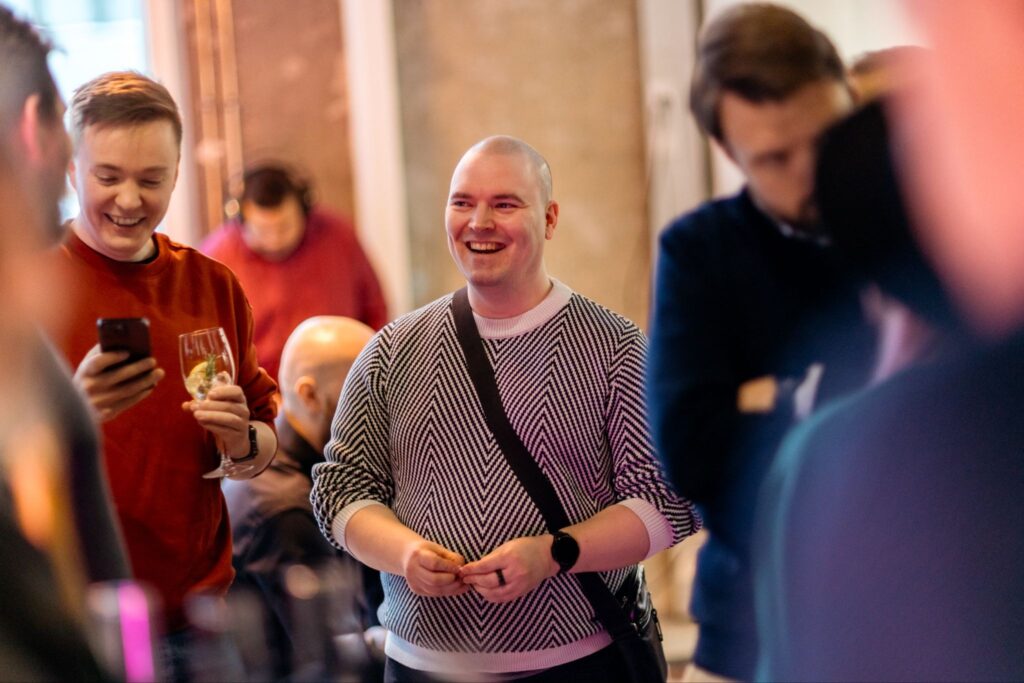
People of WeAre: Meet Juhana Ilmoniemi, Product Owner
Behind every project at WeAre are people with different backgrounds, skills and stories to share. In our People of WeAre series, we introduce the colleagues who make up our teams across Finland and Poland, exploring their work, experiences and life beyond the office.
This time, meet Juhana Ilmoniemi, Product Owner at WeAre Solutions, who shares his career journey, experiences working with Renta Easy, and thoughts on AI, teamwork and the future of software development.
More Than Product Ownership
For Juhana, product ownership is about understanding what people need, helping team members do their best work, and finding better ways to turn ideas into services.
His career has taken him through 3D graphics, software development, and global e-commerce before bringing him to WeAre, where he now works as a Product Owner for Renta Easy, the online service of the equipment rental company Renta.
With AI changing how software is developed, Juhana is enjoying the work more than he has in years.
From 3D Graphics to Product Ownership at WeAre
Juhana’s journey into technology began early. At just 16, while still in high school, he landed his first paid job creating 3D graphics. Over the following years, his work expanded into animation, graphic design, front-end and back-end development.
After two decades on the agency side, he joined Fiskars, where he managed the Fiskars brand’s websites across 28 countries. His work later grew to cover the shared e-commerce platform behind several of the Fiskars Group’s other brands, including Iittala, Wedgwood and Royal Copenhagen. There he translated the brands’ business needs into development priorities.
As one of his managers put it, he was the glue between business and tech.
From Fiskars he moved to Barona as E-Commerce Lead, running a multinational development team that built online services, and then to WeAre when the Product Owner role for Renta Easy came up.
Understanding People Is at the Heart of His Work
Renta Easy is the service Renta’s customers in several European countries use to rent, track and return construction equipment. Juhana’s responsibilities involve understanding customer needs, working with developers and deciding how the product should evolve.
He believes one of the most important parts of product ownership is recognising the difference between what someone asks for and what they actually need.
A customer might request a new button or a particular feature. Rather than building it straight away, Juhana asks what problem it is meant to solve. That conversation often leads to a better solution than the one first suggested.
Within the team, a Product Owner’s responsibility goes beyond managing tasks and priorities. It also means building the trust that lets people share ideas, raise concerns and admit mistakes.
That trust is built in small daily doses. The team renamed its daily stand-up ”morning coffee”, because talking about whatever comes up turned out to be worth more than a status round. With most people working remotely, it is where they get to know each other as people. The familiarity that builds there carries into retrospectives, where the real conversations about how the team works take place.
What makes all of this work is vulnerability, and it has to start with him. If he is not the first to admit a mistake or say he is struggling, it is hard for anyone else to.
My job is to foster trust and vulnerability in the team.
That approach has been shaped by experience, reflection, and reading. One book that stuck is ”Ego Is the Enemy” by Ryan Holiday, for its reminder that it is not about him. That makes admitting a mistake easier, and it leaves room for what everyone else on the team brings.
Improving How Renta Easy Is Built
When Juhana joined the project, the service had been in development for a long time and had grown feature by feature. Its design and user experience had become hard to manage.
Rather than proposing one large redesign, he started with small improvements that were low-cost and quick to show their value. How a change is communicated matters as much as the change itself. Propose redoing the whole design and the answer is no: it sounds huge and expensive, and like a distraction from everything else in progress. Show the client how much a small amount of work did for one page, and permission for the next one appears on its own. Over time, that is how the team earned the trust, and with it the room and autonomy to improve the application.
The application already had components, but business logic and presentation had grown together in them, which made them hard to reuse. He went on to rebuild the product’s design system, and the developers rebuilt the components on top of it.
A new screen used to take about two weeks to develop. Now it takes a couple of days, and the user experience is better.
And this was before the team began using AI extensively.
How AI Is Changing His Work and the Team's Future
Early this year, one of the developers asked an AI coding tool to rewrite a whole page of the application. That is normally a day or two of work. He went out for a kebab, and when he came back, it was done. Once a developer has seen that, it is hard to go back.
Juhana had been experimenting with AI at home for years by then, through projects of his own. In the past year, almost everything he does at work has changed. Development tickets are written by AI and he reviews them. AI drafts a few design alternatives in Figma and he picks one and refines it. The team’s delivery has multiplied.
For him, the biggest change is how quickly an idea becomes something you can look at. The design of a new reporting page took less than two days. A year ago, he would have set aside more than a week for the design alone.
”I think work is now more fun than it has been for a long time.”
Juhana recognises that the change brings uncertainty, especially for developers, since writing code has been the heart of the job for as long as the job has existed. His answer is to widen the identity, from developer to builder. The team is working towards that: developers taking part in planning, talking with the business and working on the design, and owning a change from idea to production with a lot of freedom in how they approach it. Coding becomes one part of that journey rather than the whole job, and their relationship with it changes.
For Juhana, the future of software development is not only about becoming better at using AI. Understanding customers, solving real problems and working well with others will matter just as much.
What Working at WeAre Means to Juhana
Ask Juhana about WeAre, and he talks about people.
He joined a team where people support one another, take responsibility for their work and are comfortable discussing things openly. Looking back, he says he could not have hoped for a better team.
One memory stands out. A colleague based in Poland, after leaving the team, paid their own way to the company Christmas party. For Juhana, it showed what the team meant to people better than he could put into words.
He also values the freedom WeAre gives people to work in the way that suits them. He follows the same principle with the Renta Easy team, where he tries to understand what helps people do their best work.
He encourages people to apply even if they do not meet every requirement in a job description. An interview is a conversation where both sides get to know each other and decide whether they are a good fit.
When asked what he would tell someone considering joining WeAre:
”You know how you work best, and we’ll try to make that possible.”
Facebook
Twitter
LinkedIn