
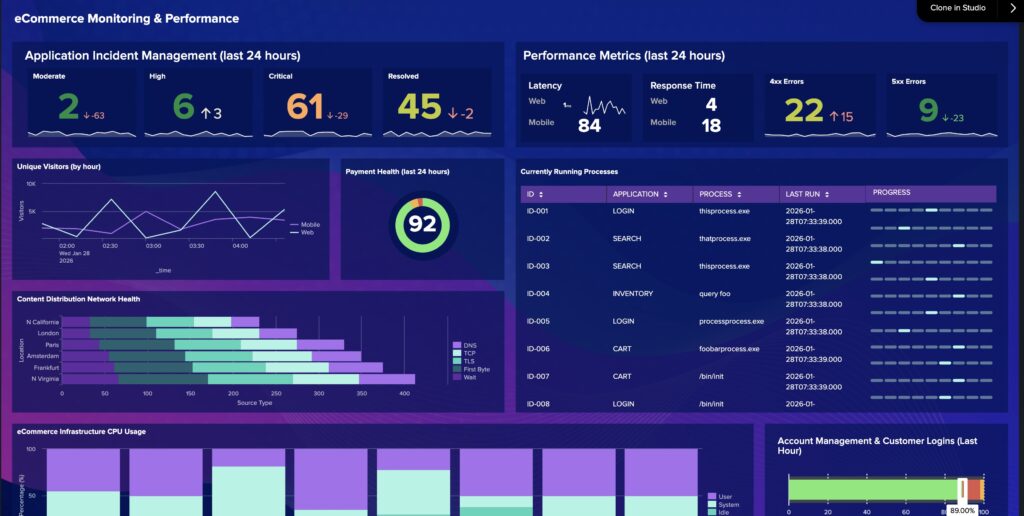
Real-time log processing pipelines continuously ingest, process, and analyze log data as it’s generated, providing immediate insights into system behavior and performance. Unlike traditional batch processing, which handles data at scheduled intervals, real-time pipelines enable instant detection of issues, security threats, and performance anomalies. This approach is essential for modern distributed systems, where rapid response times directly impact business outcomes and user experience.
What is real-time log processing and why do modern systems need it?
Real-time log processing involves continuously capturing, transforming, and analyzing log data as events occur across your infrastructure. This approach processes data streams immediately rather than collecting logs for periodic batch analysis, enabling organizations to detect and respond to issues within seconds or minutes instead of hours.
Modern distributed systems generate massive volumes of log data from applications, servers, databases, and network devices. Traditional batch processing approaches create dangerous blind spots where critical issues can escalate undetected. Real-time processing fills these gaps by providing continuous visibility into system health, security events, and performance metrics.
The business value extends beyond technical monitoring. Real-time log processing enables proactive incident response, reduces mean time to resolution (MTTR), and supports compliance requirements that demand immediate detection of security events. For organizations running cloud-native applications or handling high-transaction volumes, this capability directly impacts revenue protection and customer satisfaction.
Batch processing remains suitable for historical analysis and reporting, but real-time processing has become essential for operational monitoring, fraud detection, and maintaining system reliability in production environments.
What are the key components of a real-time log processing pipeline?
A real-time log processing pipeline consists of five essential components that work together to capture, process, and deliver actionable insights from streaming log data. Each component serves a specific function while maintaining the continuous flow of information through the system.
Log collectors form the entry point, gathering data from various sources, including application logs, system metrics, and infrastructure events. Popular collectors include Fluentd, Logstash, and Filebeat, which can parse different log formats and handle multiple input sources simultaneously.
Message brokers act as the pipeline’s backbone, providing reliable data transport and buffering capabilities. They ensure data durability during processing spikes and enable multiple consumers to access the same log streams. Apache Kafka dominates this space, though Amazon Kinesis and Apache Pulsar offer viable alternatives.
Stream processors perform real-time transformations, filtering, enrichment, and analysis on the flowing data. These components can aggregate metrics, detect patterns, and trigger alerts based on predefined rules or machine learning models.
Storage systems provide both short-term buffering and long-term retention for processed logs. Modern architectures often combine fast storage for recent data with cost-effective solutions for historical archives.
Visualization tools complete the pipeline by presenting processed data through dashboards, alerts, and reports that enable teams to understand system behavior and respond to issues effectively.
Which streaming technologies work best for log processing pipelines?
Apache Kafka leads the streaming technology landscape for log processing due to its exceptional throughput, durability, and ecosystem maturity. Kafka handles millions of messages per second while providing strong consistency guarantees and built-in replication for fault tolerance.
Kafka excels in environments requiring high throughput, multiple consumer applications, and complex data routing scenarios. Its distributed architecture scales horizontally, and the extensive ecosystem includes stream processing frameworks like Kafka Streams and ksqlDB for real-time analytics.
Amazon Kinesis offers a fully managed alternative that integrates seamlessly with AWS services. Kinesis Data Streams provides automatic scaling and built-in monitoring, making it ideal for organizations already invested in the AWS ecosystem. However, it typically costs more than self-managed Kafka at scale.
Apache Pulsar presents a newer option with unique advantages, including multi-tenancy, geo-replication, and the ability to handle both streaming and queuing workloads. Pulsar’s architecture separates serving and storage layers, enabling independent scaling of each component.
Technology selection depends on several factors: existing infrastructure, team expertise, scalability requirements, and budget constraints. Kafka suits most enterprise scenarios, Kinesis works well for AWS-native architectures, and Pulsar appeals to organizations requiring advanced multi-tenancy features.
Also consider the operational overhead, as managed services reduce maintenance burden but may limit customization options compared to self-hosted solutions.
How do you design a scalable log processing architecture?
Scalable log processing architectures must handle varying data volumes, traffic spikes, and growing infrastructure demands without compromising performance or reliability. Design decisions made early in the implementation process directly impact the system’s ability to scale cost-effectively.
Partitioning strategies form the foundation of scalability. Distribute log data across multiple partitions based on source systems, log types, or time windows. This approach enables parallel processing and prevents bottlenecks caused by concentrating too much data in single processing units.
Implement auto-scaling policies that respond to queue depths, processing latency, and resource utilization metrics. Modern container orchestration platforms like Kubernetes provide horizontal pod autoscaling that can dynamically adjust processing capacity based on workload demands.
Design fault tolerance through redundancy at every level. Use multiple availability zones for critical components, implement circuit breakers to handle downstream failures gracefully, and establish clear data retention policies that balance storage costs with recovery requirements.
Performance optimization requires careful attention to data serialization formats, network bandwidth, and processing efficiency. Choose compact serialization formats like Avro or Protocol Buffers for high-volume scenarios, and implement data compression to reduce network overhead.
Plan for operational complexity by implementing comprehensive monitoring of the pipeline itself. Track processing latency, error rates, and resource utilization across all components to identify scaling bottlenecks before they impact system performance.
What challenges should you expect when implementing real-time log processing?
Real-time log processing implementations face several technical and operational challenges that require careful planning and robust solutions. Understanding these challenges upfront helps teams prepare appropriate mitigation strategies and avoid common pitfalls.
Data consistency becomes complex in distributed streaming environments, where events may arrive out of order or be processed multiple times. Implement idempotent processing logic and use event timestamps rather than processing times for accurate sequencing. Consider using exactly-once processing semantics where data accuracy is critical, though this typically comes with performance trade-offs.
Backpressure handling presents ongoing operational challenges when downstream systems cannot keep pace with incoming data volumes. Design graceful degradation strategies such as data sampling, priority-based processing, or temporary storage buffers to prevent system overload during traffic spikes.
Schema evolution requires careful coordination as log formats change over time. Implement versioning strategies that allow new and old formats to coexist during transition periods, and use schema registries to maintain compatibility across different system components.
Monitoring pipeline health adds another layer of complexity, as traditional monitoring approaches may not capture the nuances of streaming data flows. Establish end-to-end tracing capabilities that track data from ingestion through final processing, and implement synthetic transactions to verify pipeline functionality continuously.
Resource management becomes critical as streaming applications typically run continuously and consume resources even during low-traffic periods. Plan for cost optimization through appropriate instance sizing, auto-scaling policies, and data retention strategies that balance operational needs with budget constraints.
How do you monitor and maintain log processing pipelines effectively?
Effective monitoring and maintenance of log processing pipelines require comprehensive visibility into both the pipeline’s technical performance and its business impact. Successful teams establish monitoring practices that enable proactive issue detection and rapid resolution when problems occur.
Track key performance indicators, including processing latency, throughput rates, error percentages, and resource utilization across all pipeline components. Establish baseline measurements during normal operations to identify anomalies quickly. Infrastructure observability platforms like Splunk provide unified monitoring capabilities that correlate technical metrics with business outcomes.
Implement multi-layered alerting that escalates based on issue severity and business impact. Configure immediate alerts for critical failures like data loss or processing stops, while using trend-based alerts for gradual performance degradation that might indicate capacity planning needs.
Establish clear runbooks and incident response procedures that enable team members to diagnose and resolve common issues quickly. Document troubleshooting steps for scenarios like processing delays, connector failures, and capacity constraints. Regular incident response drills help teams maintain readiness for production issues.
Performance maintenance requires ongoing attention to data quality, processing efficiency, and cost optimization. Regularly review processing patterns to identify opportunities for performance improvements, such as adjusting partition strategies or optimizing data transformation logic.
Plan for capacity growth through regular performance testing and capacity planning exercises. Monitor trends in data volumes, processing requirements, and infrastructure costs to make informed decisions about scaling strategies and technology upgrades.
Successful pipeline maintenance also involves staying current with security updates, dependency management, and technology evolution within the streaming ecosystem. Establish regular maintenance windows for updates and testing to ensure long-term system reliability and security.