
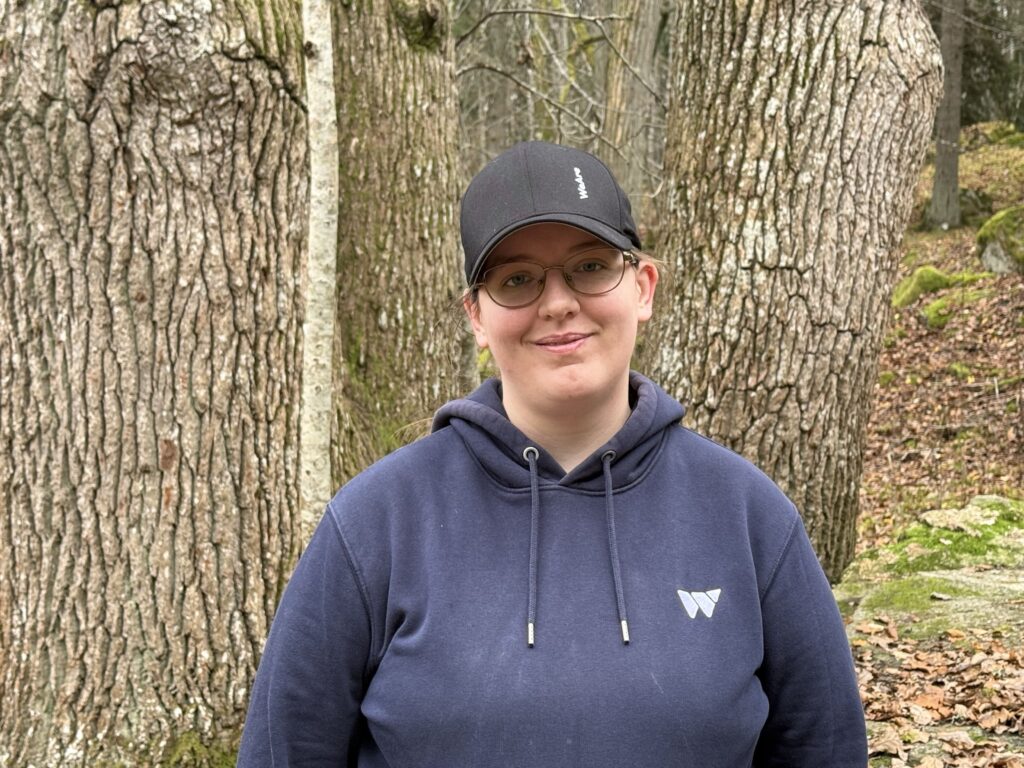
People of WeAre: Meet Kinga Karasiewicz, Data Engineer
In this edition of People of WeAre, we meet Kinga Karasiewicz, Data Engineer at WeAre. Kinga shares her experiences working with data at Renta, the challenges she enjoys, and why understanding people is just as important as understanding technology.
It's Not Just About the Numbers
If you ask me what I do as a data engineer, the simplest answer is that I help turn data from different systems into information people can actually use. Of course, the reality is a little more complicated, especially when those systems operate differently and do not always agree with each other.
I have been working with data for almost seven years, and for the past four years, I have been part of WeAre, working on data engineering for our customer Renta.
My days involve everything from building data pipelines and investigating unexpected results to discussing business requirements with colleagues and customers. What I enjoy most is seeing how that work makes someone’s everyday tasks a little easier.
How Did I End Up at WeAre?
I joined WeAre when I was looking for a change but wanted to continue working with data. I remember applying for jobs during the summer, which was perhaps not the easiest time to find a new opportunity.
What stood out about WeAre was the recruitment experience. The conversations felt relaxed and focused on my interests, experience and what I wanted to do, rather than being overly formal interviews.
I did not know much about the Renta project before joining, but the opportunity sounded interesting and matched what I was looking for. I learned much more about the project once I started, and four years later, I am still working with the same customer.
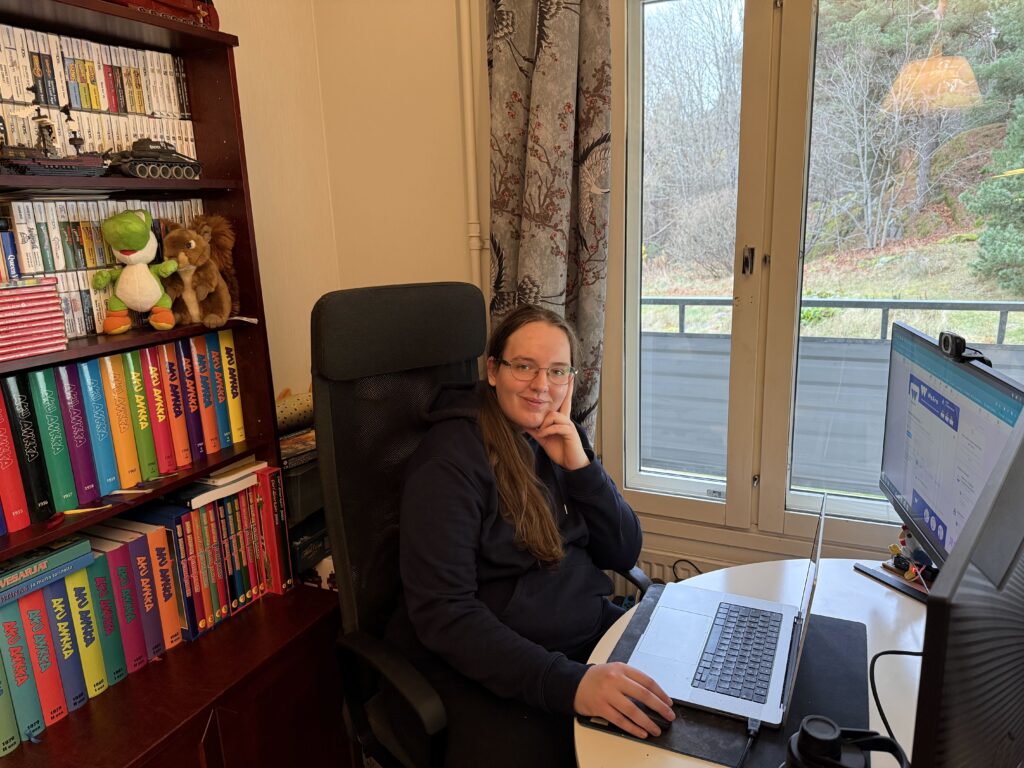
So, What Does My Everyday Work Look Like?
Renta is an equipment rental company operating across several European countries. One interesting thing about the business is that individual countries have considerable freedom in choosing the systems they use.
For our data team, this means bringing together information from different sources and making it useful for the wider organisation.
We work with everything from rental contracts and invoices to machine availability, GPS locations, operating hours, waste management, electricity consumption and work accident reporting.
Technically, most of our work happens across AWS and Snowflake, using tools and languages such as Python, PySpark, SQL, AWS Glue and Flink.
Our day usually starts with a team meeting where we discuss what everyone is working on and whether anyone needs help. After that, my work can vary quite a lot. Some days I focus on developing something new, while other days I spend time investigating unexpected data or discussing requirements with colleagues.
One thing people might find surprising is that data engineering involves a lot more communication than they might expect. You spend plenty of time asking questions, understanding how different systems work and figuring out why the information does not always look the way you expected.
Even then, if you think that you will be mostly working with data, a lot of the time you're working is with people. How do they want to use the system? What exactly do they expect?
Kinga Karasiewicz
What Makes the Work Challenging?
One of the projects I am currently working on involves preparing rental pricing information for Renta Easy.
At first, the idea sounds quite simple: calculate a rental price based on certain rules. However, once you start looking at different rental types, individual pricing, discounts, fixed prices, rental lists and product groups, you realise how complicated those rules can become.
A large part of the challenge is understanding the information provided by different systems and making sure we interpret it correctly. Sometimes the answers are not immediately clear, and I need to discuss the same issue with several people before finding the right solution.
Data itself can also be unpredictable. For example, a machine sensor might suddenly report an impossible number of operating hours because someone has manually changed its values. We need to understand why that happened and decide how the information should be handled.
These situations have taught me that sometimes the best thing you can do is look at the problem from another angle instead of trying to force your original solution to work.
It can be frustrating, but there is also a lot of satisfaction in finally understanding what went wrong and finding a way forward.
What Makes the Work Rewarding?
Some of the work I am proudest of involves the operational reports we prepare for Renta’s rental depots.
For example, a report might identify a machine that is physically at a depot but is currently on rent. Another might highlight information that needs to be corrected before an invoice can be processed. We can also report the operating hours of machines that were used outside the scope of their contracts.
These might not sound like particularly complicated things, but they can make a real difference to people who would otherwise spend time checking the information manually.
I especially enjoy it when someone contacts me about a report, asks a question or explains how they have used the information. It tells me that the work we are doing is useful and that someone is actually making decisions based on it.
For me, that is more satisfying than simply creating another report full of numbers.
If something that previously took an hour of manual checking can now be done in a few minutes, I think that is something worth being proud of.
Further reading: Curious About What Else We're Automating at Renta?
Speaking of saving time and reducing manual work, we’ve also been exploring how AI can support software development at Renta. In a recent project, we built a workflow where specialised AI agents help turn Jira tickets into reviewed pull requests, with human oversight and Splunk monitoring throughout the process.
Interested in how it works? Read our case study: From Jira Ticket to Reviewed Pull Request: AI Agents at Renta.
What Is It Like Working With the Team?
One of the things I appreciate about my work is the collaboration with people from different teams and technical backgrounds.
We have colleagues working on data preparation, infrastructure and reporting, and we also work closely with the teams responsible for Renta’s different applications.
Although we have our own responsibilities, we regularly help each other solve problems. Sometimes a quick conversation with someone who knows a particular system can save hours of investigation.
After four years on the project, I have also become quite familiar with how the different systems work together. That knowledge helps when someone asks why something behaves in a particular way or why a certain solution might not work.
I think that is an important part of being a data engineer. Technical skills are essential, but understanding the bigger picture and knowing who to talk to are equally valuable.
What About AI and the Future of Data Engineering?
AI tools have gradually become part of my everyday work, particularly when I encounter unfamiliar technical problems or want to explore a different approach.
At Renta, we also use AI-based tools for tasks such as extracting information from documents, and I see opportunities to make data more accessible to people who are not familiar with databases or reporting tools.
For example, instead of knowing exactly which fields to select or how to filter information, someone could eventually ask a question in everyday language and receive the information they need.
However, I think it is important to remember that AI still depends on the quality of the underlying data. If the information is inconsistent or the business rules are unclear, the technology cannot automatically solve those problems.
That is one reason I believe understanding the data, the systems and the people using them will remain important, regardless of how our tools develop.
A Little About Me Outside Work
Outside work, one of my biggest interests is gaming, particularly collecting older Nintendo games and consoles.
I have collected games for systems such as Game Boy and Nintendo 3DS, and I have even spent time recreating the original artwork for game cases when I could not find suitable versions.
It can become quite a project of its own, especially when you want everything to look right!
I enjoy collecting physical games because there is something special about being able to play them on the original hardware, even many years later.

As for work, I still enjoy the fact that there is always something new to learn. Some problems take longer than expected, and not every day goes according to plan, but that is also part of what makes data engineering interesting.
If I could give one piece of advice to someone considering this career, it would be to stay curious and not focus only on the technical side. A large part of the job involves understanding people, asking the right questions and learning how different businesses operate.
After all, the most rewarding part of working with data is not simply having the information available, but seeing someone put it to good use.
Facebook
Twitter
LinkedIn